CYBER SIEGEVR PROTOCOL
A first-person VR space shooter built for Meta Quest — pilot a spacecraft through a procedurally generated asteroid tunnel and fight waves of android enemies in immersive, escalating combat.
Mission Directive
Cyber Siege is a first-person VR space shooter where players pilot a spacecraft through a procedurally generated asteroid tunnel while fighting waves of android enemies. Designed for the Meta Quest, the experience focuses on immersive combat, escalating difficulty, and responsive XR interactions.
Constant Forward Motion
Players are propelled through a hostile asteroid field under relentless pressure — no stopping, no retreating.
360° Spatial Awareness
The fully immersive VR environment demands constant awareness in every direction. Threats emerge from all angles.
Escalating Tension
Scaling difficulty ensures the pressure never lets up — reaction time and positioning become increasingly critical as you dive deeper.
What You Do
🎮 Player Actions
- Navigate through an endless asteroid tunnel
- Use VR controllers to aim and shoot enemies
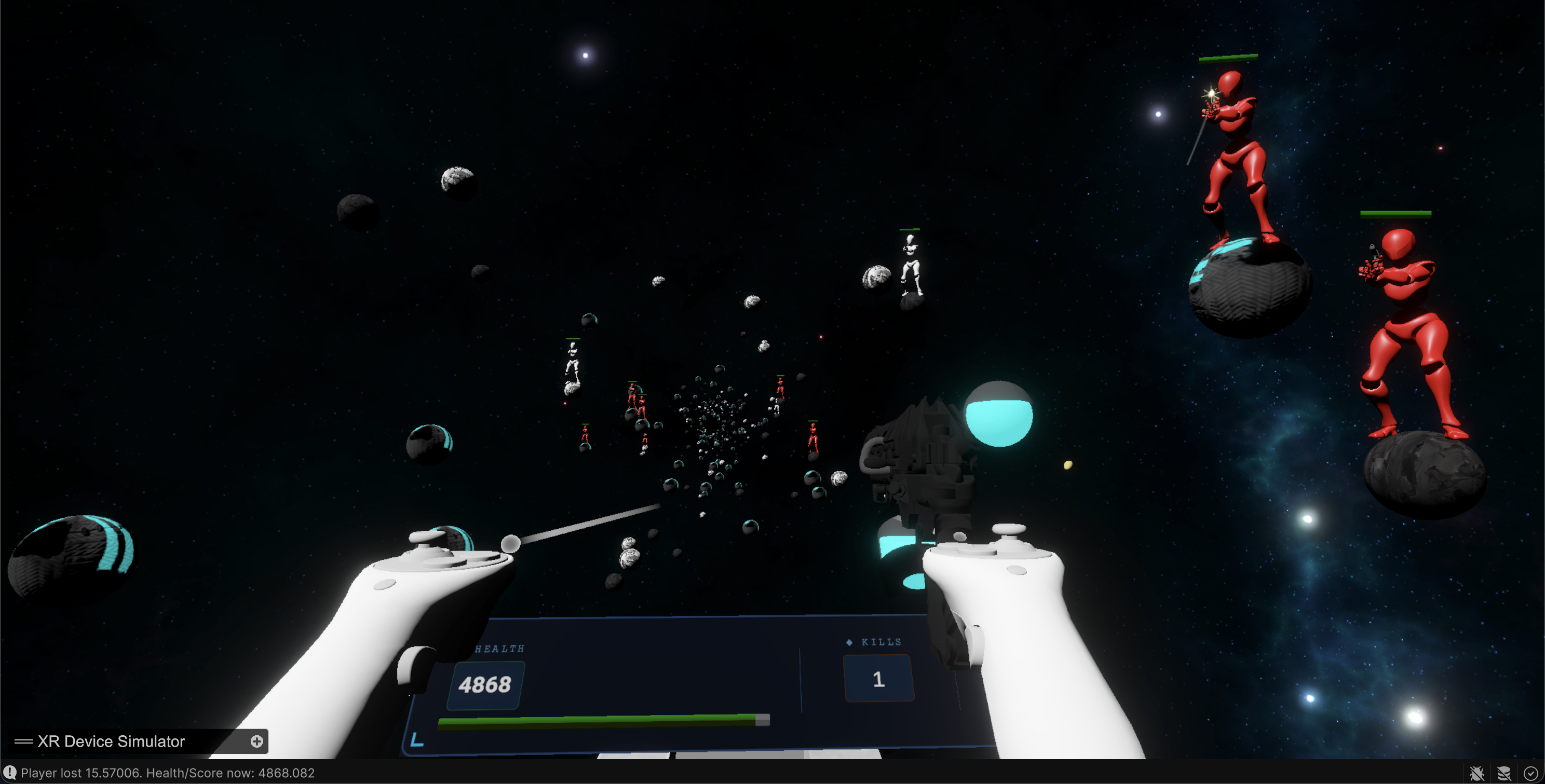
- Destroy android robots with visible health bars
- Survive as difficulty increases over time
- Reach higher scores through combat efficiency
👾 Enemy Encounters
- Two distinct enemy types with different threat levels
- Dynamically spawned waves relative to your position
- Enemies track and attack within configurable detection range
- Red units deal more damage and absorb more hits
- Pressure intensifies with no lull periods at higher depths
Designed and implemented all core gameplay systems from scratch
Built XR interaction system — VR movement, hand tracking, and shooting
Developed enemy combat, health systems, and AI targeting behavior
Created procedural asteroid tunnel generation system
Designed all UI and feedback systems — health bars, score, panels
Optimized project for VR performance on standalone Quest hardware
Technical Mechanics
- Ship follows XR Origin — player headset and controllers directly control navigation
- Hybrid movement system supporting both XR hardware and non-VR testing
- Player positioned inside spacecraft for full physical immersion
- Continuous forward propulsion through a curved asteroid tunnel
- Speed gradually increases to intensify gameplay over time
- Gun physically attached to VR hand using XR Interaction Toolkit
- Projectile-based shooting with collision detection via triggers and physics
- Supports both continuous fire and tap-to-shoot modes
- Single-hit flag ensures each projectile registers only one collision
- Enemies spawn dynamically relative to the player's position — always ahead
- Each enemy includes a health system, damage response, and death effects
- Directional targeting toward player with positional offsets
- Player health tracked and displayed in real time via UI
- Enemy damage reduces player health on projectile impact
- Damage output scales as player progresses deeper into the tunnel
- Game ends when health reaches zero — triggers lose sequence
- Points awarded per enemy destroyed — higher-value targets reward precision
- Difficulty scaling increases intensity: faster speed, more enemies, higher damage
- No dead zones — consistent enemy presence throughout all stages
- Procedurally generates asteroids with a safe navigation radius
- Mix of static and moving asteroids creates illusion of speed and depth
- Hyperspace / light-speed visual effect attached to player for full immersion
- Impact effects on hit, death particle effects on destruction
- HUD displays: Health · Score · Kill Count
- Win / Lose panels with restart system for full replayability
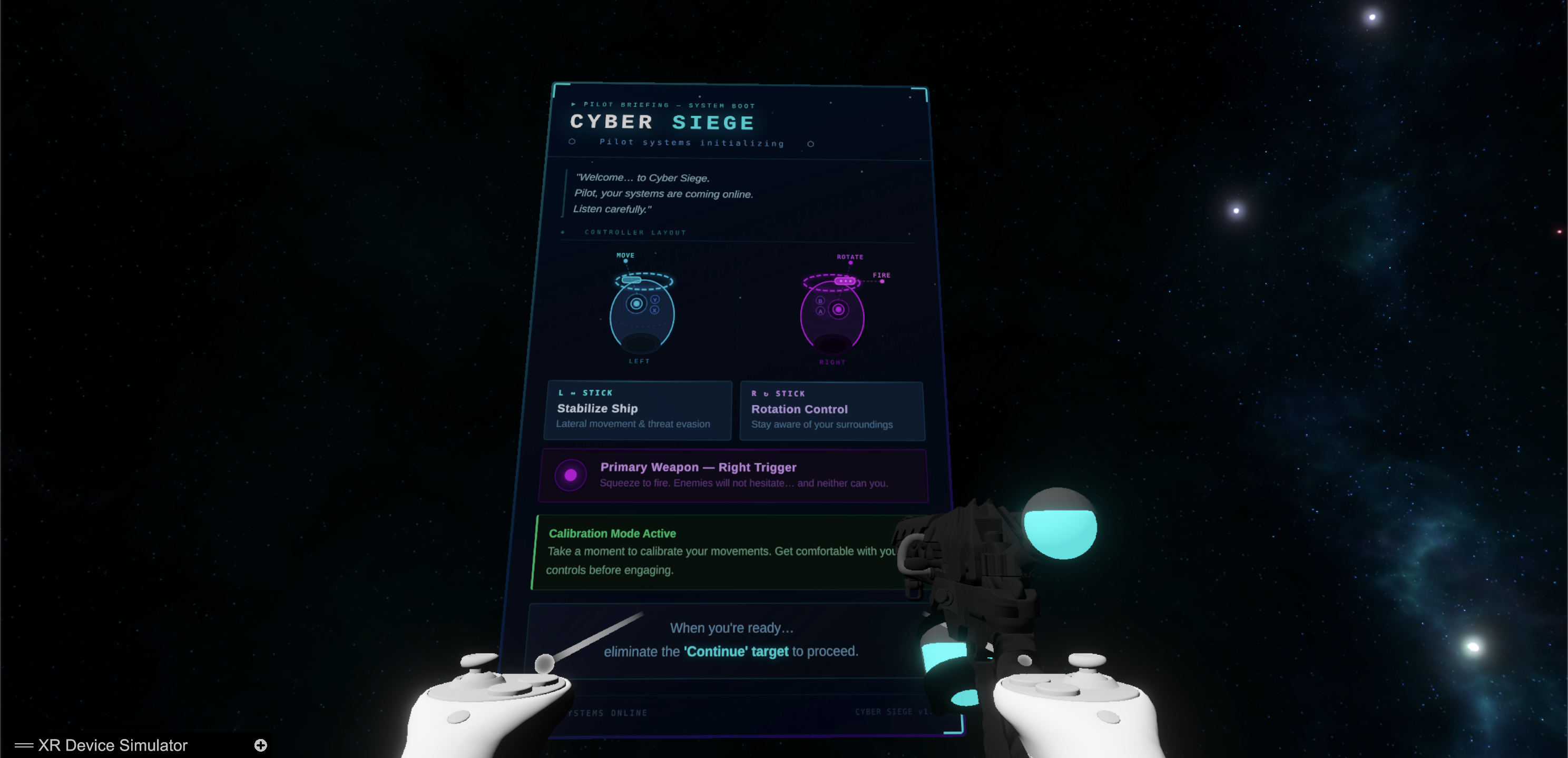
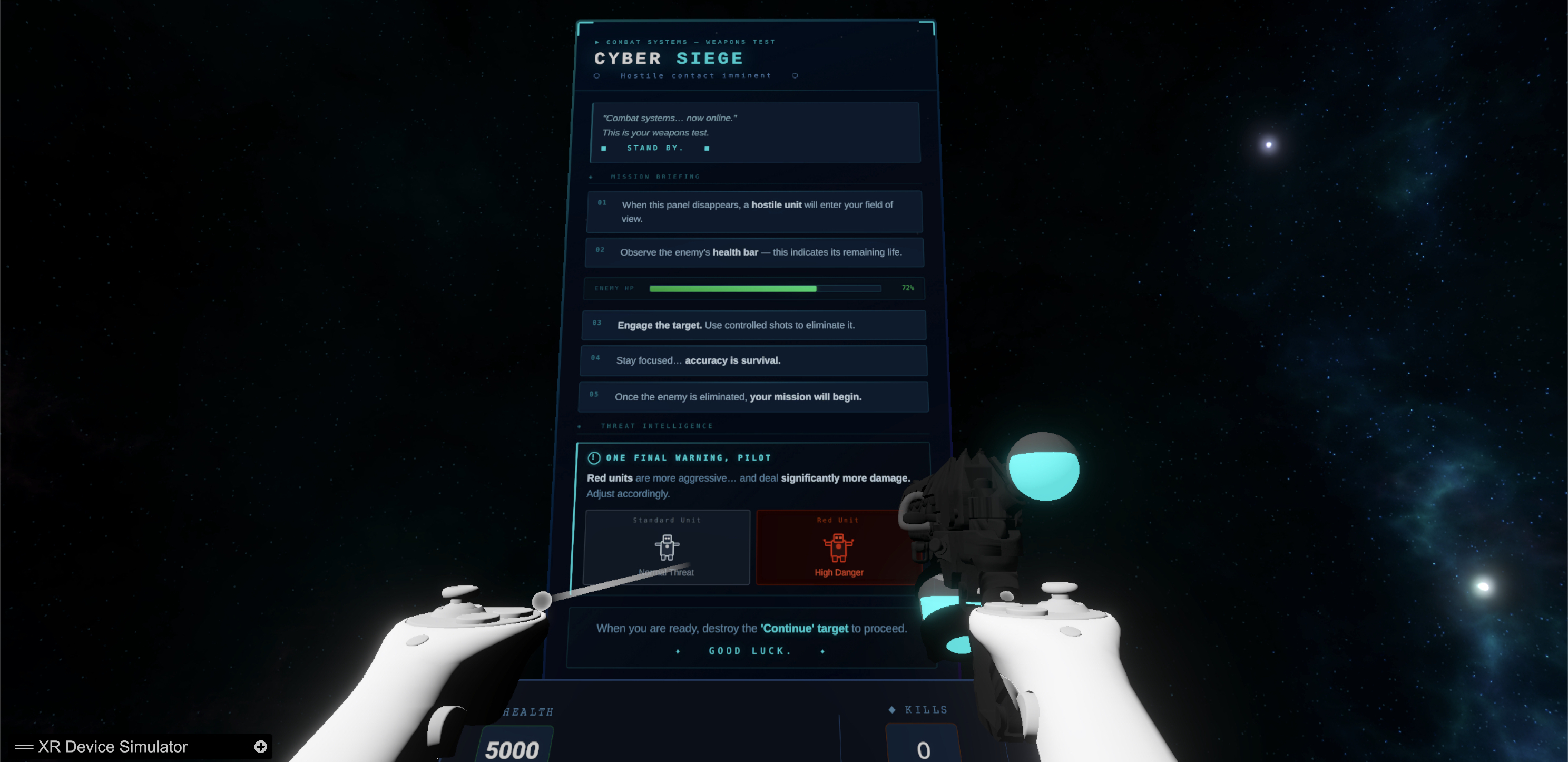
- Intro tutorial sequence teaches controls before combat begins
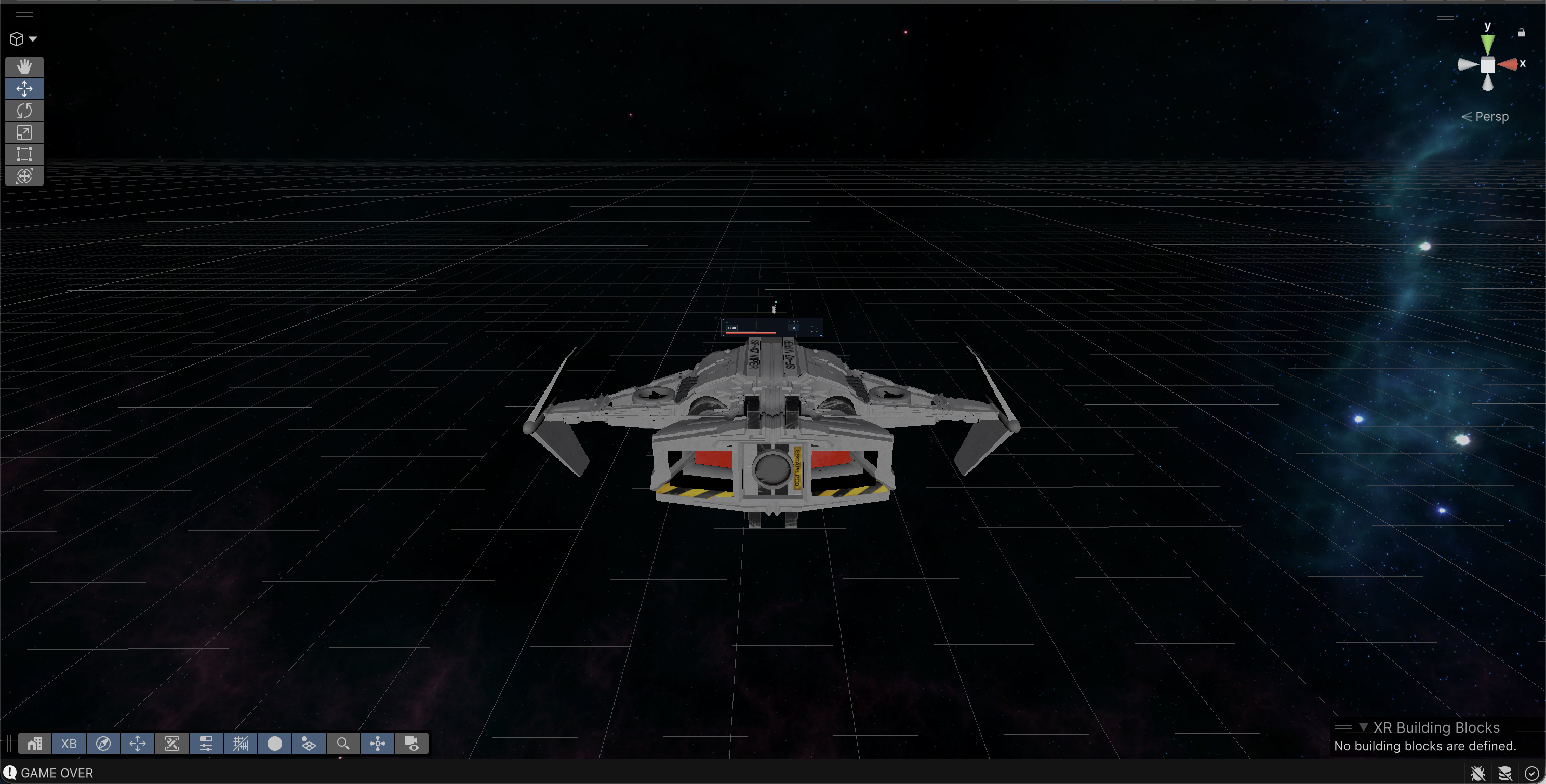
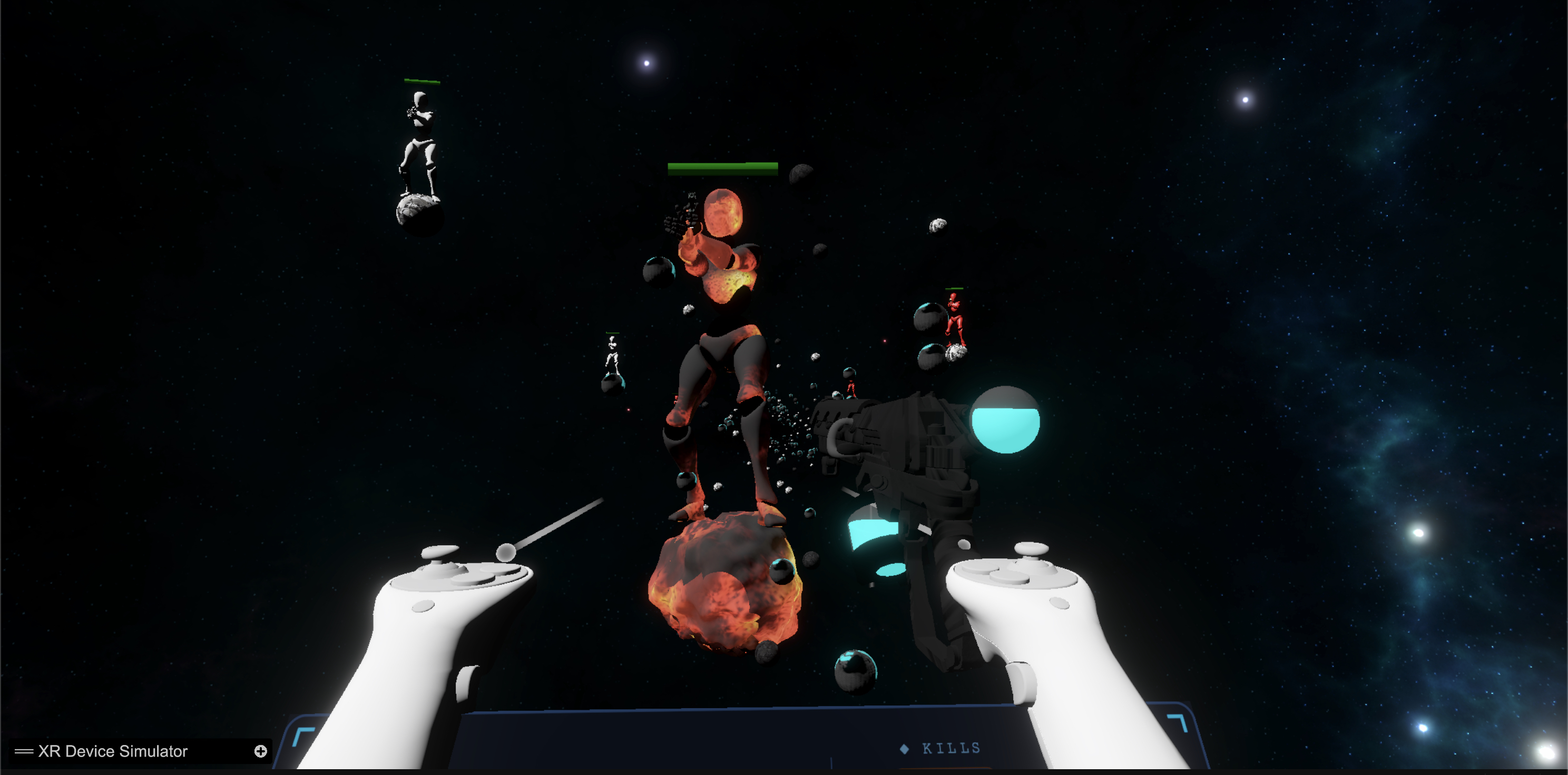
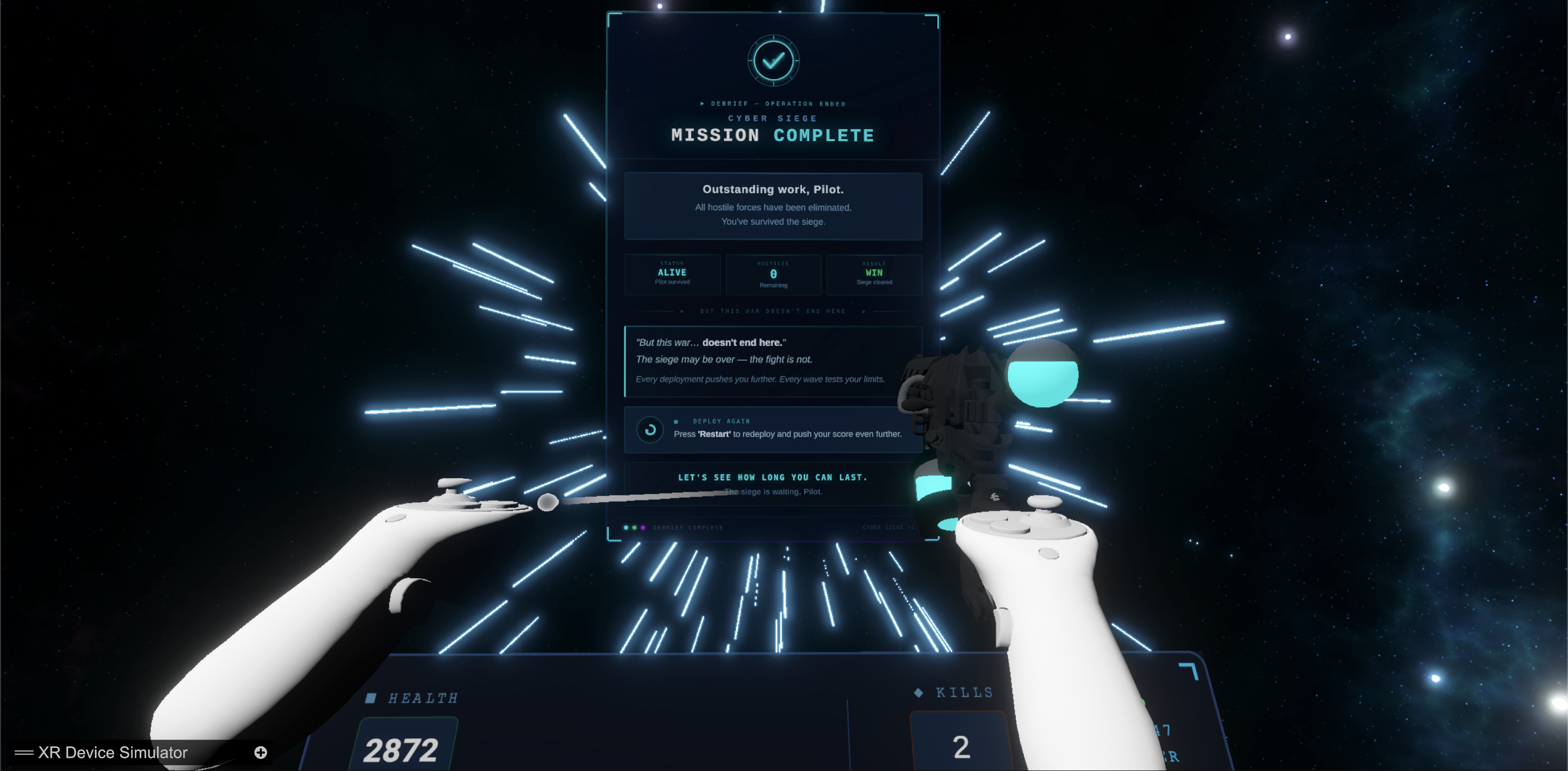
Gameplay Footage & Screenshots
Source Code & Download
Challenges & Solutions
XR Origin vs Ship Movement
Player movement conflicted with XR Origin, causing disconnection between the headset view and the ship.
Implemented a hybrid follow system that syncs ship position with XR Origin while maintaining control continuity.
Projectile Hit Detection
Bullets were unreliable — passing through targets or triggering multiple collision events on the same enemy.
Added per-projectile hit flags and reworked collision hierarchy with GetComponentInParent() to ensure one hit per bullet.
UI Interaction in VR
Buttons and panels were difficult to interact with due to collider conflicts and ray-casting misalignment in VR.
Refined collider setup and integrated XR interaction components for accurate ray-based UI interaction.
Quest Performance
High object count — asteroids, enemies, and effects — caused frame rate drops on standalone Quest hardware.
Optimized URP shaders and lighting, limited spawn density, and disabled expensive effects like SSAO.
Build Size & APK Compile Time
Android APK builds were extremely large and compilation times were unsustainably slow during iteration.
Removed unused assets, reduced texture sizes, and limited included scenes and shader variants.
Enemy Spawning & Pacing
Enemies appeared behind the player, with dead periods of zero enemy presence breaking tension.
Refined spawn logic so enemies always appear ahead of or alongside the player throughout.
Hyperspace Effect Sync
The hyperspace speed effect appeared static while the player moved through it, breaking immersion.
Attached the effect directly to the player/ship transform so it travels with the camera at all times.
Enemy Aiming & Cleanup
Enemies fired inaccurately and objects persisted incorrectly during gameplay state transitions.
Implemented directional targeting with positional offsets and a controlled script-based cleanup system.
Accomplishments
Fully playable VR shooter deployed as APK on Meta Quest
Stable real-time combat with reliable projectile and damage systems
Modular enemy system with two types and scalable difficulty
Procedural asteroid tunnel environment with moving asteroids
Functional XR interactions — movement, shooting, and UI
Integrated scoring, health, kill tracking, and game state systems
Complete gameplay loop: intro → combat → win/lose → restart
Optimized for standalone VR hardware with consistent frame rate
What I Learned
How to design for VR immersion — spatial audio, physical interaction, and comfort — vs. flat-screen games
Managing XR Origin, player space, and how headset tracking integrates with in-game movement
Optimizing for standalone VR hardware with strict memory, GPU, and thermal constraints
Building modular, reusable systems for spawning, combat, UI, and game state management
Debugging real-time interaction systems where frame timing, physics, and XR input interact simultaneously
Iterating rapidly on game feel — how subtle changes to speed, spawn rate, and damage affect experience